
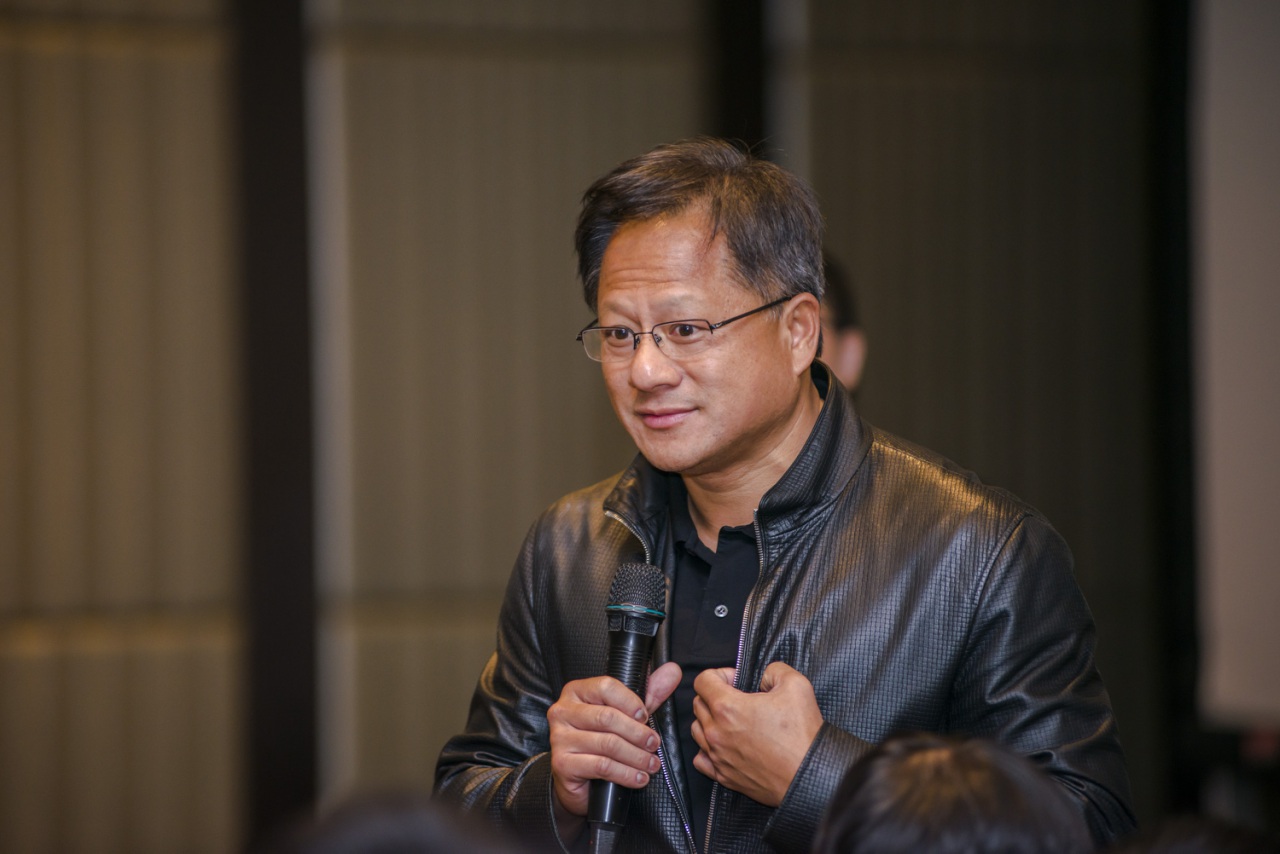
The Jensen Huang keynote protest lasted about a minute. Twenty minutes into Nvidia’s GTC conference in Berlin on Wednesday, October 21, Greenpeace activists stood on their chairs. They unfurled a banner telling Nvidia to clean up its dirty business. Then they shouted a question at the most powerful executive in AI. What, they demanded, is Nvidia doing about its chips turning up inside Russian weapons?
Huang’s response was gracious, and it was also incomplete. He told security to go easy, promised to talk to the protesters later, and got on with his show. However, the question followed him out of the hall, because it was never really a question about one keynote. It was a question about whether the world’s most valuable company can control where its technology ends up.
Watch the story on CEO Medium News:
Watch the full episode of CEO Medium News
What the protesters actually demanded
The protest had two targets, and both were specific. First, the activists demanded answers on Nvidia components reportedly recovered from Russian drones and missiles used in Ukraine. Second, they attacked the environmental cost of the AI buildout. Greenpeace Germany has been building a case on that issue for months.
Greenpeace set out its asks in a press release around the protest. On the weapons question, it wants Nvidia to run independent audits of its global distributors. That way the company can show its products are not reaching military programmes. On climate, it wants Nvidia to extend its 100 per cent renewable energy commitment across the whole supply chain by 2030. That second demand carries a number. A Greenpeace study released in September found Nvidia’s disclosed Scope 3 emissions have risen 725 per cent since 2020. Those are the indirect emissions across its supply chain. Nvidia’s own operations already run on renewable power. But many of its manufacturing partners in East Asia still rely on fossil fuels.
In other words, this was not a random heckle. It was a prepared intervention with a policy list attached. The activists staged it at the one moment in the year when Nvidia’s chief executive could not avoid hearing it. The disruption itself lasted about a minute, according to MarketWatch’s report from the auditorium. The demands, by contrast, will last much longer.
The Jensen Huang keynote protest points at a very small chip
The hardware at the centre of this story is not one of Nvidia’s giant data centre processors. It is the Jetson Orin, a compact, consumer-grade computer module built for robotics and machine vision. Students, developers and startups buy it for beneficial applications. It sells in volumes that no export control regime can track piece by piece.
In August, Ukraine’s Defence Intelligence agency identified a Jetson Orin module inside a Russian S-71 Monochrome cruise missile. The munition uses the chip for autonomous targeting. The New York Times also reported similar Nvidia products in debris from Russian drones. Notably, the Ukrainian agency did not allege that Nvidia knowingly supplied Russia. The allegation is narrower and, for Nvidia, harder to shake. Its mass-market hardware is reaching a battlefield through resale chains it does not monitor.
Nvidia’s position has not changed since August. “Our Jetson Orin modules are consumer-grade products sold to students, developers, and startups for a wide range of beneficial applications,” the company told Tom’s Hardware, in a statement reported by Mezha. Nvidia did not design the modules for military use, and it does not sell them in Russia. The secondhand market makes final destinations hard to trace. All of that is probably true. Even so, it is increasingly beside the point, because the standard has moved. When a chip guides a missile, “we did not sell it to them” answers a legal question. The protesters were asking a leadership one.
Composure is a skill. It is not an answer.
By every account, Huang handled the interruption superbly. As security moved in, he told them, “It’s OK, go easy, give her a chance.” He added that “everybody has a chance to say something.” The crowd applauded. “All important issues,” he said, “but let me get through my keynote.” And then he did. He unveiled the DSX POD modular system for AI factories and the OpenShell platform for autonomous agents. He closed with a robot demo that briefly refused to follow his instructions.
That composure is a genuine executive skill. It is one reason Huang has become the public face of the AI era. We saw the same instinct in his White House clash with Anthropic’s Dario Amodei. He conducted that fight in public without ever losing the room. He has also argued, in remarks we covered, that AI firms should get no regulatory waivers. That makes the Berlin moment more pointed, not less. A chief executive who rejects special pleading for his own industry should accept scrutiny of his own supply chain.
Meanwhile, the commercial machine barely noticed. Nvidia shares rose nearly 2 per cent in premarket trading after the keynote. Huang spent the Berlin trip telling European leaders to build their own AI economies. He told bankers that Nvidia chips hold their value so well they can serve as collateral for data centre debt. A day before the keynote, he told Chancellor Friedrich Merz that Europe cannot regulate its way to technological leadership. Coverage of the event summarised that line. The keynote, in short, is no longer a product launch. It is a political stage, and on a political stage, every unanswered question stays on the record.
What founders should take from this
Most founders will never face a banner at their own keynote. Nevertheless, the underlying exposure is the same at every scale. If your product can be resold, repurposed or embedded in something harmful, your distribution chain is part of your governance. That is true whether you planned it that way or not. Nvidia’s defence rests on not knowing where used Jetson modules end up. For a smaller company, not knowing is rarely a defence at all. It reads as a choice.
So the practical lessons are plain. Audit your distributors before someone audits them for you, and keep the paperwork. Write down, in advance, the answer you would give. Imagine someone shouting the hardest question about your product in a room full of cameras. And if you promise a conversation later, hold it, because the follow-up is what gets remembered. Huang’s promise to talk to the protesters was the graceful part of the story. What he says in that conversation is now the story itself. For more on how we think about leading through moments like this, see our Leadership & Management hub.
Photo: NVIDIA Taiwan, CC BY 2.0, via Wikimedia Commons
Free downloads for founders
Get the weekly startup funding tracker, the founder press checklist, and the CEO Medium media kit. Enter your work email and they're yours.
Browse free resourcesFollow CEO Medium
Leadership stories & founder interviews, wherever you are.
