
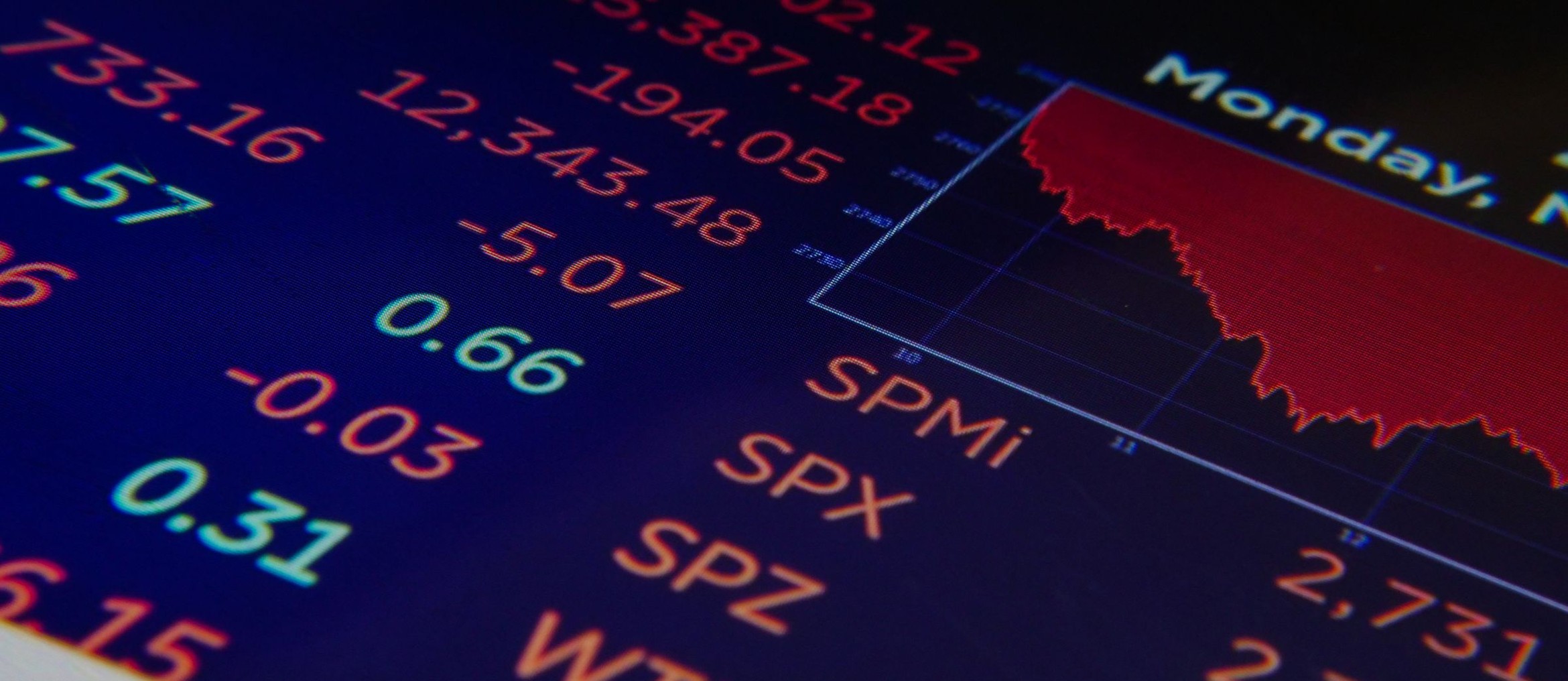
The AI bubble stopped being a debate on Thursday. The Nasdaq 100 fell 6.36 percent, its worst session since March 2020, and Reuters estimated the drop erased about $2.5 trillion in market value from the index. The Nasdaq Composite fell 5.52 percent, down 1,421 points to 24,315, its steepest fall since April 2025. By the close, the Nasdaq sat in correction territory, more than 10 percent below the record it set a month earlier.
Friday brought a bounce, not a rescue. The Nasdaq Composite rose 1.09 percent to 24,579.43, the S&P 500 added 0.31 percent, and the Dow slipped 0.46 percent. The week still ended down across the board: the Nasdaq lost 3.4 percent, the S&P 2.7 percent, the Dow 0.9 percent. It was the fourth straight weekly decline for all three. The Nasdaq 100 closed the week 13.94 percent below its October 6 record, and the Friday bounce took back only about a fifth of Thursday’s fall.
The selling was concentrated where the AI story lives. The Philadelphia Semiconductor Index fell 12.25 percent on Thursday, then rallied 4.2 percent on Friday. Nvidia fell 9.3 percent on Thursday. AMD fell 17.3 percent. The Cboe Volatility Index, Wall Street’s fear gauge, jumped nearly 70 percent in a day. A strong jobs report on Friday, 165,000 jobs added in October against 65,000 expected, helped the rebound. It did not change the AI bubble question hanging over the week.
The AI bubble debate, in five numbers
Five numbers frame the argument. First, about $740 billion: the combined 2026 capital spending guided by Amazon, Alphabet, Meta and Microsoft, most of it for AI infrastructure, up from about $410 billion in 2025. Second, $326 billion: the debt the five big AI spenders, including Oracle, raised in 2026, triple last year, according to S&P Global Market Intelligence. Third, $895.4 billion: the total purchase commitments and leases in Anthropic’s own filing, mostly for compute. Fourth, 40 of 41: the local ballot measures where voters favoured limits on data center development. Fifth, $2.5 trillion: the market value Reuters says Thursday erased. The debate is whether the spending behind the first three numbers ever produces the profit to justify the valuations the fifth number just cut.
Not everyone reads the numbers as a warning. Bill Ackman’s Pershing Square argued in its third quarter letter that the $740 billion is an offensive bet on growth, not a defensive cost, and that the market is underestimating the revenue it will generate. The firm estimates a gigawatt of AI capacity costs $40 billion to $50 billion to build and can earn a 15 to 25 percent pre-tax return on capital. Pershing Square holds Microsoft, Meta and Amazon, so it is arguing its own book as well as a thesis. Both sides now have numbers. Neither side has proof yet.
Voters said no. The market heard them.
The trigger was political. On November 3, voters in 10 states decided 41 local ballot measures affecting data center policy. According to Ballotpedia’s tally, voters favoured limits on development in 40 of the 41 contests. The breakdown matters: voters approved 27 measures that limited development or expressed opposition to it, including five full bans, and defeated 13 measures that would have made development easier. The single exception was Harwood, North Dakota. Ohio alone accounted for 21 of the 41 measures.
No new federal law has passed, and the ballot results are local, not national. But the market treated them as a signal about the buildout itself. Towns are voting against the facilities while the biggest companies keep announcing them. On the same day as the selloff, Google announced its first Wyoming data center, a long-term $17 billion investment in Laramie County, with a 702 megawatt fuel cell development and a promise to pay for 100 percent of the power it uses. The announcement and the selloff landed hours apart. That is the tension in one day: the companies are still building, and the neighbours are now voting.
The polling behind the votes is just as stark. The Atlantic reported in early November that more than 80 percent of Americans think the technology is moving too quickly, and more than 70 percent oppose data center construction in their area. By one calculation cited by The Atlantic, AI spending accounted for 92 percent of GDP growth in the first half of 2025. If that is anywhere near right, the economy and the AI trade are now the same bet, and Thursday showed what happens when the bet wobbles.
The debt behind the boom
The buildout is increasingly funded with borrowed money. Meta launched a bond sale of about $25 billion in total last week, dollar notes plus its first ever euro notes, drawing record orders for the euro portion. Oracle priced $10 billion of notes and filed to sell $10 billion of common stock. Alphabet priced a 6 billion euro bond sale, its second euro sale of the year. Microsoft returned to the bond market with a $25 billion transaction. The five companies raised about $326 billion in debt across 2026, triple the amount raised last year, according to S&P Global Market Intelligence.
The spending is also showing up in cash flow. Alphabet reported negative free cash flow of $9.1 billion in the third quarter, its second straight quarter in the red, on quarterly capital spending of $51.4 billion. Amazon logged negative free cash flow of $42.4 billion over the trailing 12 months. Meta reported negative free cash flow of $2.1 billion for the quarter. Microsoft was the only one of the four to report positive free cash flow, at $18.6 billion. The Financial Times put the four companies’ combined 2026 capital spending at roughly $740 billion, and Goldman Sachs projects the combined number nearing $1.14 trillion in 2027.
This is the audit phase of the AI bubble debate. The market is not asking whether AI is real. It is asking when $740 billion a year of spending turns into profit, and no chief executive has a convincing answer yet. The companies say the spending buys the future. The market wants a date. Until one side produces it, every earnings report and every bond sale will be read as evidence for or against the same question.
Anthropic is the test case
The next evidence arrives with Anthropic. The company filed its public S-1 on October 26 and an amended filing on November 2, and it plans to list on the Nasdaq under the ticker ANT. The amended filing put third quarter revenue at $16.96 billion, up about 47 percent from the second quarter, and a GAAP operating loss of $567 million, after a $974 million operating profit in the second quarter. The loss was driven by about $5.0 billion of short-term computing contracts and a $2.0 billion donation matching charge. The price range and share count are still blank.
The timing is the point. Anthropic has not confirmed a date, but reports point to a roadshow starting as early as the week of November 9, with a debut targeted for the week of November 16 and before Thanksgiving on November 26, according to the Wall Street Journal. Summer talk put the valuation as high as $2 trillion; more recent reports point to $1.5 trillion to $2 trillion. The roadshow will be the first time the public market gets to price the AI story on its own terms, in the week after the market just cut $2.5 trillion from it. If investors buy in at anything near the top of the range, the AI bubble argument takes a hit. If the price range comes in low, or the debut slips, the argument gets louder.
Read the filing carefully, because it contains both sides of the argument. Revenue is growing fast, up 47 percent in a quarter and more than tenfold year on year. The company is also losing money on the contracts that produce that revenue, and its total commitments run to about $895.4 billion, mostly for compute and infrastructure. That is the whole debate in one document: spectacular growth, funded by spectacular spending, with the profit still to come.
What founders should do now
Founders should read this week as the end of the free money phase of AI. Show unit economics before scale. Stop treating compute spend as strategy. Plan for a year when every AI dollar gets questioned, by investors, by customers and now by voters. The companies that survive a repricing are the ones that can point to revenue per dollar of compute, not to the size of their data center pipeline.
None of this means AI is finished. The technology works, the revenue is real, and Friday’s bounce showed buyers still step in. But the terms have changed. For three years, the question was how fast you could build. Now it is what the building earns. That is a harder question, and it is the one the market, the voters and Anthropic’s roadshow will all ask next. The founders who answer it first will be the ones still standing when the audit is over.
More technology stories are in the Technology archive. Anthropic’s $2 trillion filing is the document behind the next test, Amazon’s no-NDA warning on data centers shows how the buildout fight reached the boardroom, and Nikesh Arora’s warning that AI has made engineers fair game is the other side of the same cost argument.
Free downloads for founders
Get the weekly startup funding tracker, the founder press checklist, and the CEO Medium media kit. Enter your work email and they're yours.
Browse free resourcesFollow CEO Medium
Leadership stories & founder interviews, wherever you are.
