
The announcement of the CSL CEO Deborah Waterhouse appointment came on Wednesday 21 October. In fact, it closes one of the most watched succession searches in global pharma. Waterhouse has run GSK’s HIV business ViiV Healthcare since 2017. Then she takes over as chief executive and managing director of CSL on 1 February 2027. She becomes the first woman to lead the Melbourne biotech in more than three decades of its incorporated history, according to Reuters. The job she is walking into is not the one CSL chief executives used to hold. It is a repair job, and the board has priced it like one.
CSL was, until recently, Australia’s most valuable listed company and a fixture in global growth portfolios. The past year stripped that status away. A run of earnings and revenue downgrades, followed by a plan to cut 3,000 jobs, triggered selloffs. As a result, those selloffs wiped billions of dollars from its market value. Former chief executive Paul McKenzie departed abruptly in February amid investor frustration over the falling share price. Gordon Naylor, a board member, has run the company on an interim basis ever since.
The turnaround is already priced in
Here is the complication for any incoming chief executive: the recovery has started without her. CSL has forecast growth for fiscal 2027. In addition, its shares have more than doubled from the decade low they hit in June. Investors have, in effect, already paid for a turnaround that Waterhouse now has to deliver. If momentum stalls, she owns the disappointment anyway. The new leader inherits the expectations created by the rebound. Instead, she does not inherit the sympathy created by the fall.
Chair Brian McNamee set out the brief in February, when the search began. The next chief executive, he said, would need “the ability to continue the momentum of our commercial performance, renew our pipeline and simplify our operations without losing the science and purpose that built this great company.” Announcing the appointment, he argued Waterhouse has done each of those things more than once. “Deborah is an outstanding global leader with a proven ability to grow complex businesses,” he said. “The Board’s decision to appoint Deborah was unanimous.”
The CSL CEO Deborah Waterhouse record: thirty years at GSK
Waterhouse is no turnaround tourist. She joined GSK in 1996 and has spent three decades inside large, complicated pharma businesses. She ran GSK in Australia and New Zealand from 2008 to 2012. Then she ran its US vaccines business, then its US primary care business. She took the top job at ViiV Healthcare in 2017. GSK owns a majority of ViiV, with Shionogi as a shareholder. It is the world’s leading specialist HIV company. It recorded sales of £7.7 billion in GSK’s 2025 financial year. Alongside ViiV, she serves as president of GSK Global Health.
The ViiV tenure is the core of her case. HIV treatment is a market where standing still means losing. Older daily pills give way to long-acting medicines. Meanwhile, rivals circle every patent. McNamee credited her with renewing the franchise “by driving the development and commercialisation of the next generation of medicines to support patients.” In other words, she has already done the exact job CSL needs done. In practice, that job is to keep a mature, profitable drug business growing. It must grow while the business builds its next generation of products underneath it. She also brings board experience outside pharma. From 2019 to 2025, she was a non-executive director of Schroders. At Reckitt, she has been a non-executive director since July 2026.
A £1.5 million salary and a £7.71 million buyout
CSL disclosed the full contract. The numbers show how expensive it is to extract a sitting chief executive from a rival. Waterhouse will earn a base salary of £1.5 million a year. CSL sets her short-term incentive at 120 per cent of salary at target. The maximum is 240 per cent. Her long-term incentive starts at 250 per cent of salary at target, rising to 500 per cent. On top of that, CSL will hand her restricted stock units worth £7.71 million. Indeed, those units replace the GSK awards she forfeits by leaving. CSL will also hand her a further £1.65 million in performance shares. In short, those shares bridge the gap between her old and new incentive cycles.
The contract’s fine print
Two details in the fine print deserve attention. First, she will stay based in the United Kingdom. She will spend significant time in Australia, the United States and other major markets. A chief executive will run a Melbourne institution. In contrast, her home is on the other side of the world. The board is betting that it can schedule presence. Second, her contract bars her from any involvement in CSL’s Seqirus vaccines business until 31 March 2027. In fact, that bar is a legacy of her years competing against it at GSK. For her first two months in the job, one of CSL’s three divisions is formally off limits. Indeed, it is off limits to its own chief executive.
Waterhouse, for her part, leaned on an old connection to the city. “CSL is one of the great companies in our industry, and I saw what it means to Australia when I lived and worked in Melbourne,” she said. “The foundations are strong. My job is to continue the momentum and evolve the path into reliable growth for patients and shareholders.”
What this appointment says about boards in 2026
Read the pattern and a shift in boardroom taste becomes visible. When a share price collapses, boards no longer reach for a visionary with a transformation slogan. They reach for an operator who has run a comparable P&L, in a comparable regulatory regime, for a long time. Waterhouse’s entire career has been spent inside businesses that sell complex medicines to sophisticated buyers under heavy regulation. In short, there is no learning curve in this appointment, and that is precisely the point.
It is the mirror image of the decision we covered in the Lindt board story this week. In that decision, directors removed a chief executive and reached back for a predecessor. Boards on both sides of the world are making the same calculation. In a year of downgrades and activist pressure, familiarity beats novelty. The Lindt board wanted a known pair of hands from inside the building. The CSL board wanted a known pair of hands from inside the industry.
Why this appointment matters for women
For women watching the top of the corporate ladder, the appointment matters for a structural reason. Waterhouse did not get the job through a diversity initiative headline. She got it because she had spent nine years running a £7.7 billion business. Ultimately, that business maps almost exactly onto the vacancy. The pipeline argument has always been that women reach these roles when they are given the big operating jobs first. Her career is that argument, documented. More profiles like hers sit in our Women Founders & Leaders hub. The pattern across them is consistent. The route runs through revenue responsibility, held for years.
The tests arrive quickly. Seqirus returns to her remit at the end of March. The fiscal 2027 growth forecast has to be met, not managed down. And the simplification programme she inherits has to land. In particular, it includes those 3,000 job cuts. It has to land without hollowing out the science the board wants to protect. “The foundations are strong,” she said. By this time next year, investors will grade that sentence.
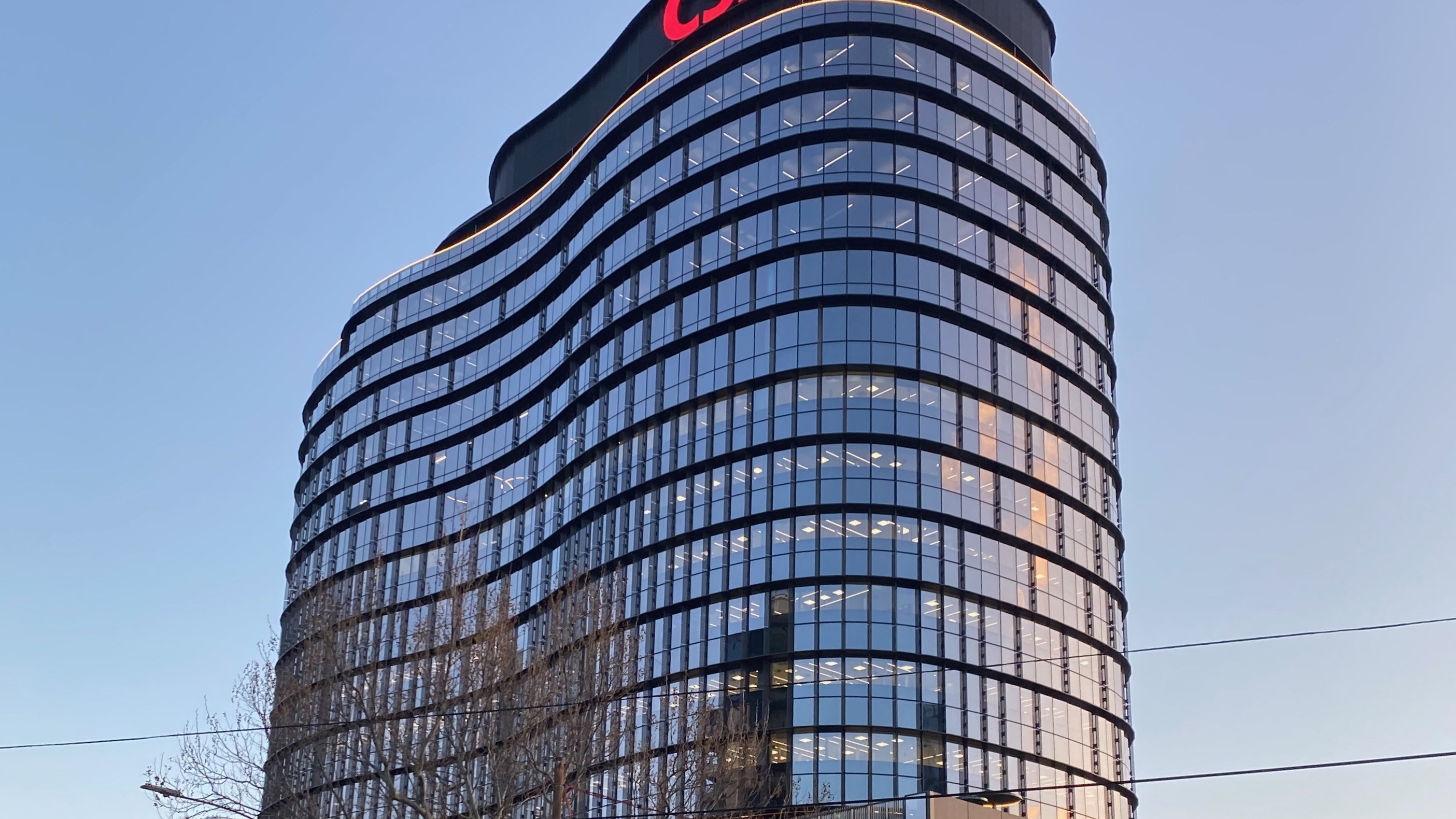
Photo: Sgroey, CC BY-SA 4.0, via Wikimedia Commons
Free downloads for founders
Get the weekly startup funding tracker, the founder press checklist, and the CEO Medium media kit. Enter your work email and they're yours.
Browse free resourcesFollow CEO Medium
Leadership stories & founder interviews, wherever you are.
