
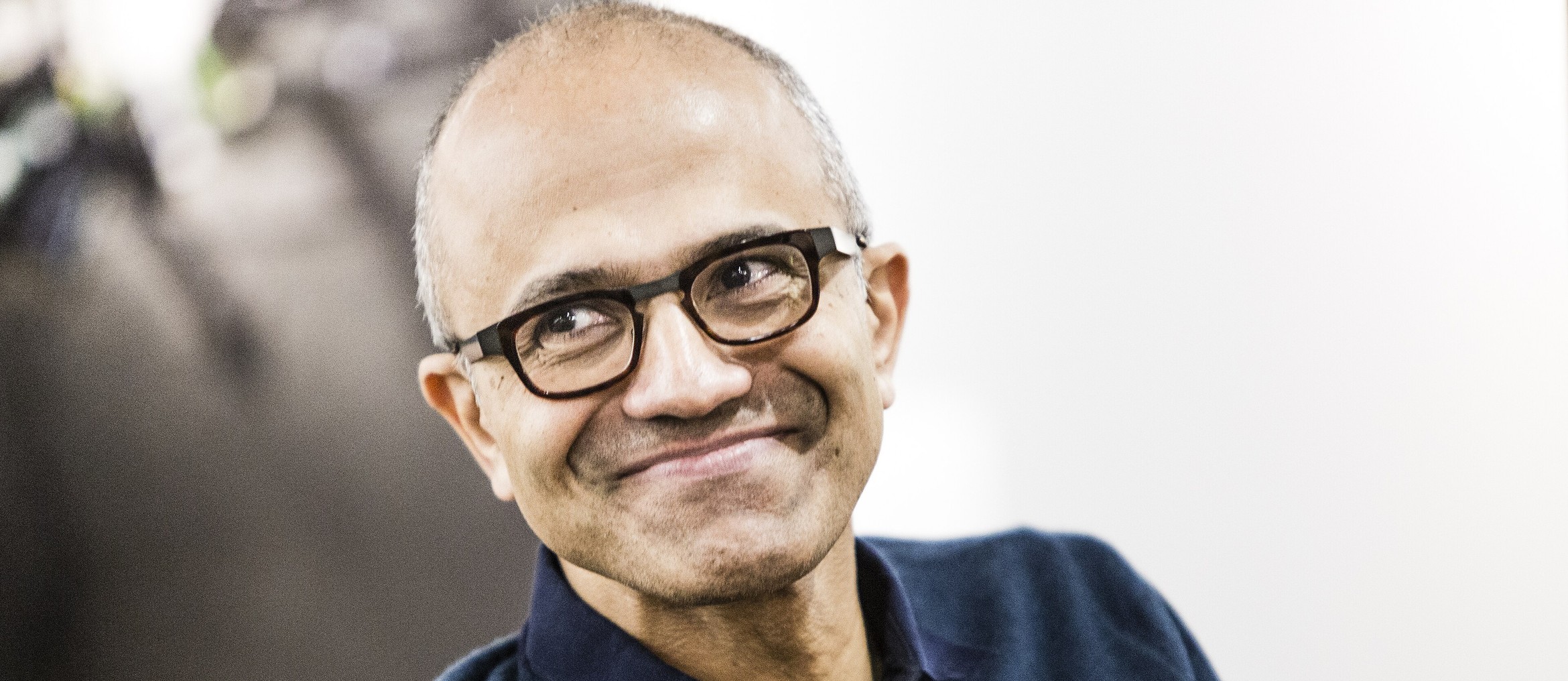
Three weeks after Microsoft offered voluntary buyouts to 60,000 employees, Satya Nadella finally explained why. The Microsoft 60000 employee buyouts were not, he insisted, about replacing people with artificial intelligence. They were about giving people a choice. He said it on stage at the DealBook Summit on November 18, in conversation with Andrew Ross Sorkin, and it was the first time the chief executive has talked in public about what AI means for his own workforce.
What he actually said
Start with what Nadella did not say. He did not say AI will replace software engineers. He said the opposite, in his own winding way. “Let’s take software engineering. We went from, ‘Well, we don’t buy that AI can ever do software.’ To suddenly, ‘Wow, it can do all software, and why do we need software engineers?’ To now rediscovering that software engineering is very much alive and, in fact, is going to thrive, except the way the team is organized and the work that a software engineer does has now got a new operating point,” he told Sorkin.
The proof, for Nadella, is a team of 11 developers building Cowork, the AI agent inside Microsoft 365 apps. “They build a software factory that builds the product. They don’t build the product,” he said. That is the model he wants for the whole company. He believes every employee will one day become a manager of agents rather than a person directly doing the work. “That level of direction is what, by the way, is going to happen in all jobs,” he told Sorkin.
Microsoft 60000 employee buyouts, and the numbers behind them
The offer went out on October 26 to about 60,000 employees, roughly 27 percent of Microsoft’s 223,000 staff. It was the largest voluntary buyout in the company’s history. The terms match Microsoft’s standard severance: up to 39 weeks of base pay below the senior ranks, plus continued stock vesting and health coverage. Microsoft expects only 3 to 5 percent of those offered to accept, fewer than 3,000 people. The decision deadline is in early December. Those who take it leave on December 31.
Two days after the offer went out, Microsoft reported $45.2 billion in capital spending in a single quarter, most of it on chips and data centers. Free cash flow fell 27 percent in the quarter, to $18.63 billion. The severance checks and the new graphics cards come out of the same pocket. The teams in the program include gaming, Windows, Copilot, human resources and finance. Data centers, cybersecurity, quantum computing, sales and marketing are excluded.
The take: a layoff with better manners
A buyout is a layoff with better public relations. It lets a company shrink without the headline, the WARN filings or the backlash, and it shifts the blame for leaving onto the employee. Microsoft told GeekWire the program is not a replacement for layoffs, and its Xbox unit is reportedly planning more layoffs in November and January. Read those two facts together and the picture is clear. The buyout is the polite part. The layoffs continue anyway.
Nadella said the plan out loud long before the offer went out. On a podcast in early 2025, he said: “Our total people cost will go down. Our cost per head will go up. And my GPU per researcher will go up.” Fewer people, each one paid more, each one sitting next to more computing power. That is the Nadella Swap, and the buyout is simply the moment it arrived in 60,000 inboxes.
What founders should learn
Say it plainly and early. Nadella himself named the damage done by slow, coded messaging. Speaking on the Pragmatic Engineer podcast last week, he said Microsoft had “created enormous anxiety in people sort of feeling that they don’t have control of their own destiny because the way we have talked about this AI revolution.” That anxiety is not an accident of the AI debate. It is the product of exactly this kind of messaging: a buyout letter first, an explanation three weeks later.
The contrast is already on the record. In April, Microsoft offered a voluntary retirement program to around 8,600 longtime employees, and more than 30 percent accepted. In July, it cut 4,800 jobs outright. The buyout is the third way, and other chief executives are watching. Qualcomm told 517 people this week that their layoffs were a performance problem. Every founder planning an AI reorganisation now has a template to copy, and a warning about what happens when the explanation arrives after the letter.
The deadline is in early December. Watch how many of the 60,000 take the money, because that number, not the press release, tells you how much faith Microsoft’s own people have in the AI future their chief executive is selling. If 3 percent accept, the program was a message. If far more do, it was an exit.
For more on the leaders shaping this moment, read the rest of our Technology and Leadership coverage, including how Qualcomm cut 517 jobs and called it a performance problem and what Jensen Huang’s exit says about CEO accountability.
Free downloads for founders
Get the weekly startup funding tracker, the founder press checklist, and the CEO Medium media kit. Enter your work email and they're yours.
Browse free resourcesFollow CEO Medium
Leadership stories & founder interviews, wherever you are.
