
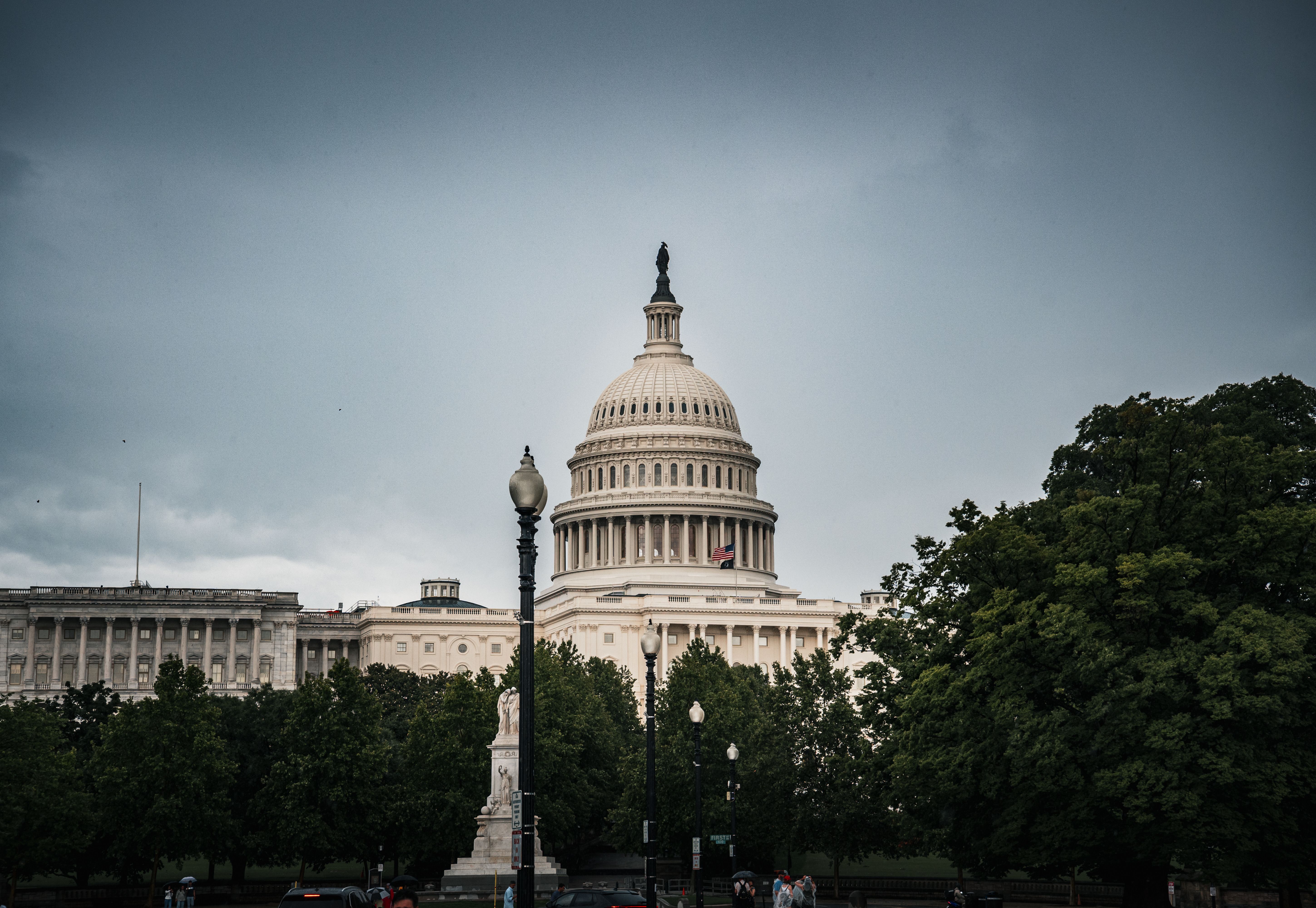
Democrats win House Senate midterms 2026 result took both chambers of Congress on November 3, flipping seven Senate seats and 39 House seats and winning the midterm popular vote by about 13 points, the widest margin since 1976. The Associated Press called the Senate on election night and the House the next morning. Two Senate races, in Alaska and Mississippi, are still uncalled, and dozens of House races are still counting, so the final totals are still moving. What is settled is who holds the gavels in January, and that changes the operating environment for every founder whose business touches Washington.
That is the story: not the scale of the win, but what it puts on the calendar. The new Congress convenes in January with subpoena power in Democratic hands, and the first thing it intends to use it on is the administration’s energy deals, its cancelled projects, and the tech companies that argued they were too important to regulate. Founders should treat January as a deadline, not a date.
The Democrats win House Senate midterms 2026: the numbers
Start with the Senate, where the result is cleanest. Seven seats flipped, all from Republican to Democrat, none the other way. Texas was the biggest: James Talarico beat Ken Paxton by a double-digit margin, the first Democrat to win a Texas Senate race in decades. Roy Cooper took North Carolina by nearly 20 points. Troy Jackson beat Susan Collins in Maine, Sherrod Brown took Ohio, Adam Hamilton took Kansas, Annie Andrews took South Carolina, and Josh Turek took Iowa. With Alaska and Mississippi still counting, Democrats hold 54 seats to the Republicans’ 44.
Democrats flipped 39 seats to the Republicans’ two, and the Associated Press had called 253 seats for Democrats against 157 for Republicans by Friday morning, with 25 races still uncalled. Those totals will keep moving, and no single number should be treated as final. Hakeem Jeffries, the House Democratic leader, has formally launched his bid to become Speaker, which would make him the first Black Speaker in American history. That is a projection, not a settled result: he still has to win a floor vote on January 3, and no challenger has emerged.
The win ran deeper than Congress. Five governorships flipped, in Texas, Ohio, Georgia, Nevada and Iowa, giving Democrats 28 of the 50 governorships, a majority for the first time since 2010. About 366 state legislature seats changed hands, according to Tangle’s tally, and the Democratic Legislative Campaign Committee counts more than 300 flips and at least ten flipped majorities.
The blame game, and why founders should watch it
Inside the Republican Party, the argument about what went wrong started before the counting finished, and founders should listen, because it tells you which policies are now in play. Vice President JD Vance blamed the war with Iran. In a roughly 600-word post on X on November 4, he wrote that the reason they lost is the war, and listed ending it, the cost of living, and changing the American relationship with Israel among the four tasks ahead. President Trump said the assessment was largely true.
Senator Ted Cruz blamed tariffs and the war. He said tariffs were making everything too expensive, the war had dragged on too long, and the party faced an economic disconnect with voters. He called the result a blue tsunami, and pointed to the 13-point popular vote margin as the greatest in a midterm since 1976. Governor Ron DeSantis called the result close to an extinction-level event for Republicans.
The exit polls back the affordability story. In the NBC News exit poll, 66 percent of voters said the tariffs hurt the national economy and only 21 percent said they helped. About two thirds said the president’s policies had worsened economic conditions. The economy was the top issue for 39 percent of voters, and 62 percent said the war with Iran was the wrong decision. None of this proves a single cause: each diagnosis serves a different faction’s argument, and a founder with tariff exposure or energy costs should not wait for the party to agree on which one to drop.
What changes in January: the subpoena calendar
The near-term weapon is not legislation. It is oversight, and the plans are already public. Representative Frank Pallone, expected to chair the House Energy and Commerce Committee, has promised an aggressive agenda aimed at the administration’s energy deals. The list includes Venezuela’s oil and the Pentagon’s stake in North American Blue Energy Partners, the firm tasked with developing Venezuelan reserves, an arrangement described as giving the United States authority over 65 billion barrels of oil. It includes critical minerals deals flagged for potential conflicts, and nearly 8 billion dollars in clean energy projects the administration cancelled in states that backed Kamala Harris in 2024, a pattern the administration says was not political. Pallone has also said the committee’s priority is protecting consumers, including reining in Big Tech.
Tech executives are in the frame too. Representative Greg Casar, who chairs the Congressional Progressive Caucus, said the new House majority must make it a top priority to protect Americans’ jobs, freedoms and lives from AI billionaires, and that AI company CEOs should be called to testify under oath. Senator Ed Markey echoed the call, and Representative Robert Garcia, the top Democrat on the House Oversight Committee, posted a two-word warning to industry: “Lawyer up.” Investigations into Elon Musk’s role at DOGE are also planned, and leadership has reportedly weighed a select committee on AI.
Data centers are part of the same story, and the voters said so directly. In the NBC News exit poll, 56 percent of voters called AI and data centers a crucial or major factor in their vote for Congress, 76 percent said they would oppose a data center in their own community, and 57 percent said AI will do more to hurt society than help it. Local ballot measures told the same story: 33 of 45 measures on data centers went the restrictive way, according to the Redbud Consulting tracker. OpenAI’s National Community Compact, announced November 5, was already a concession to that backlash. For founders building AI infrastructure, community consent is now a cost of building, not a public relations exercise.
Healthcare sits on the same calendar. Democrats have discussed undoing cuts the administration made to healthcare for millions of Americans, and the CVS split into two companies, announced the day after the election, landed in a week when the whole healthcare chain is about to be re-examined. Nothing here is a finding of wrongdoing: investigations and subpoenas are process, not verdicts. But process is the point. A subpoena does not need to find anything to slow a deal down.
What does not change
Here is the part founders most often get wrong about a midterm. Democrats are short of the Senate’s 60-vote threshold for overcoming a filibuster, and the presidential veto still stands. Sweeping new legislation is unlikely in the near term, and no specific bill should be treated as likely to pass. The immediate impact is oversight, delay and public hearings, not new law. And the new majority does not take power tomorrow: the current leadership holds the gavels until the new Congress convenes in January, so formal investigative powers do not shift immediately. What shifts now is the planning.
What founders should do before January
First, audit anything that touches the government. If your company has a federal contract, a grant, a permit, a tax credit or a deal with a state-owned entity, assume a document request is coming and get the file in order now. Second, re-price tariff exposure. Tariffs were blamed openly by the losing party’s own senators, and the exit polls show voters agreed, so the political cover for keeping them is thinner than it was a week ago. Third, watch healthcare and energy policy for reversals, because both are on the oversight agenda and both move slowly until they move all at once. Fourth, prepare for data center and AI scrutiny at state and federal level, and treat community consent as a line item in any buildout budget.
None of this requires taking a side. It requires reading a calendar. January is eight weeks away, and founders who spend those weeks getting their house in order will be the ones still building while everyone else answers questions.
Free downloads for founders
Get the weekly startup funding tracker, the founder press checklist, and the CEO Medium media kit. Enter your work email and they're yours.
Browse free resourcesFollow CEO Medium
Leadership stories & founder interviews, wherever you are.
