
The Flipkart CEO steps down after more than 11 years, and the official statement gives no reason at all. On Wednesday, November 25, Flipkart confirmed that group chief executive Kalyan Krishnamurthy will leave the company, with chief product and technology officer Balaji Thiagarajan leading in the interim while a successor is named in the coming weeks. His last day is reported as December 4. The statement praised a business that grew more than fivefold on his watch. It said nothing about why he is going.
The reporting says plenty. Inc42, citing three people aware of the development, reported that Walmart asked Krishnamurthy to step down as an internal investigation into alleged seller kickbacks widened across the group. The Economic Times reported the same, saying his exit was finalised when he met Walmart leadership in Bentonville earlier this month. Moneycontrol reported that Walmart asked him to go. Flipkart and Walmart have not confirmed any of it. The allegations remain unconfirmed, and the reporting does not name Krishnamurthy as a recipient of any kickback. Krishnamurthy’s own farewell statement touched on ethics and integrity, as well as growth.
Why the Flipkart CEO steps down now
Start with what the probe is alleged to be. Inc42 reported that the investigation found executives allegedly took kickbacks worth about Rs 150 crore from sellers and brands in exchange for visibility and preferential treatment, including in the private-label business. The probe began with smartphones and luggage categories and has since spread across sourcing, manufacturing, logistics and design, and across group companies including fashion platform Myntra and travel site Cleartrip. Every part of that account comes from unnamed sources. Flipkart has not confirmed the probe, the figure, or the link to Krishnamurthy’s exit.
What is confirmed is the timing. The exit follows months of tension over two things Walmart cares about more than anything else at Flipkart: the listing and the losses. Flipkart completed its move from Singapore to India in March 2026, the structural step towards a domestic listing. In May, Moneycontrol reported that Walmart had asked it to put the IPO on hold and focus on profitability first. Inc42 now reports the listing has been deferred until at least 2028. Walmart has also set a condition: EBITDA breakeven by the end of FY27, in March 2027, before it considers a listing or fresh capital. It has brought in McKinsey to assess whether Flipkart is ready to list at all.
The CFO went first. That was the warning.
Krishnamurthy is not the first senior leader to leave over this. In March 2026, Flipkart announced that group chief financial officer Sriram Venkataraman would step down. The announcement gave no reason. Inc42‘s sources now say Walmart had asked Venkataraman to go following reports of financial irregularities and kickbacks at the firm. That link comes from the same unnamed sources, not from Flipkart, and it should be read that way. But the sequence is on the record either way: the finance chief left in March, the chief executive follows in November, and the same issue sits behind both exits.
The departures go wider than the top two. By October, 14 senior executives had either left Flipkart or were on their way out, according to Outlook Business. Some weighed the delayed listing and their locked-up stock options in the decision. Flipkart offered a limited cash-out window in July, letting eligible employees sell up to 5 percent of vested options, but former employees did not get to take part.
The business case: Rs 8,468 crore and an IPO on hold
The numbers explain why Walmart’s patience ran out. Flipkart Group reported consolidated revenue from operations of Rs 1.45 lakh crore in FY26, up 18.2 percent on the year before. The consolidated net loss narrowed only slightly, to Rs 8,468 crore from Rs 8,646 crore. That is a business growing fast and still losing a fortune, eight years after Walmart paid $16 billion for control of it. Revenue growth of 18 percent with a loss that barely moves is not a turnaround story. It is a treadmill.
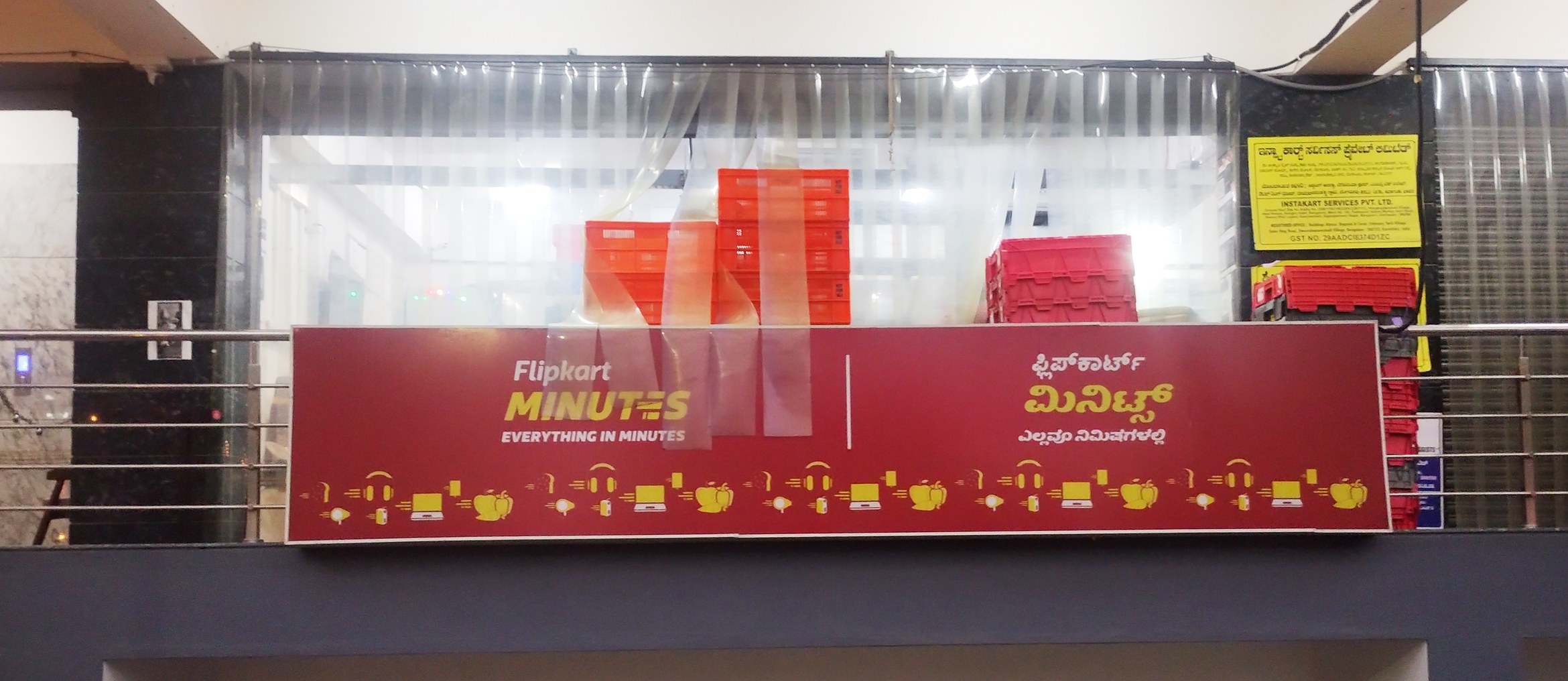
Walmart has also questioned where the money goes. Inc42 reported that Walmart pushed back on Flipkart’s expansion into food delivery and microdramas, ventures it saw as delaying the IPO. Quick commerce, through Flipkart Minutes, is the expensive bet at the centre of that argument. The service now runs about 1,200 micro-fulfilment centres across 150 cities, in a fight with Blinkit and Zepto that burns cash. The new chief executive inherits that argument along with the losses.
What founders should take from it
This is what accountability looks like when the owner is serious, and it is worth comparing with the version founders usually see. Nvidia’s board brought Jensen Huang back after saying it would not, and left the interim chief executive, Colette Kress, to learn the decision from the news. The board that cannot replace its founder is trapped with him. Walmart is the opposite case: an owner that decided the story had run out and acted on it. Both boards teach the same lesson from opposite directions. The board decides your future in a room you are not invited to, and by the time you hear about it, the decision is made.
For founders who answer to a majority owner, the lesson is blunt. If you take their money, you take their timeline. Growth without a credible path to profit is a loan against your own job, and the interest comes due in the form of a McKinsey review and an EBITDA target. And when the chief financial officer leaves over the same issue eight months before you do, treat it as the warning. It is not someone else’s problem. It is the first page of your own exit. Contrast that with Satya Nadella, who took the stage at the DealBook Summit and explained his 60,000-person buyout in public, three weeks after the letters went out. Owning a hard decision in public does not make it popular. It does make it yours.
There is a second lesson, quieter but just as real. Krishnamurthy built Flipkart into India’s biggest e-commerce company by market share and held it there for nearly a decade. The official statement is right about the fivefold growth. None of that saved him once the owner stopped believing the next chapter. Tenure is not a defence. Scale is not a defence. The only defence is a story the owner still believes, told in numbers that back it up.
What happens next
Flipkart will name a successor in the coming weeks, and the real question is what mandate the next chief executive gets. Fixing Flipkart means choosing between growth and profit in a market where Amazon India and Meesho do not wait, and doing it while the quick-commerce war burns cash. The next chief executive will either get the time and the capital to make those choices, or a shorter leash than the last one. Watch whether Walmart pairs the successor announcement with a firm IPO date. That pairing, or its absence, will tell you which one it is.
For more on the leaders shaping this moment, read the rest of our CEOs coverage.
Free downloads for founders
Get the weekly startup funding tracker, the founder press checklist, and the CEO Medium media kit. Enter your work email and they're yours.
Browse free resourcesFollow CEO Medium
Leadership stories & founder interviews, wherever you are.
