
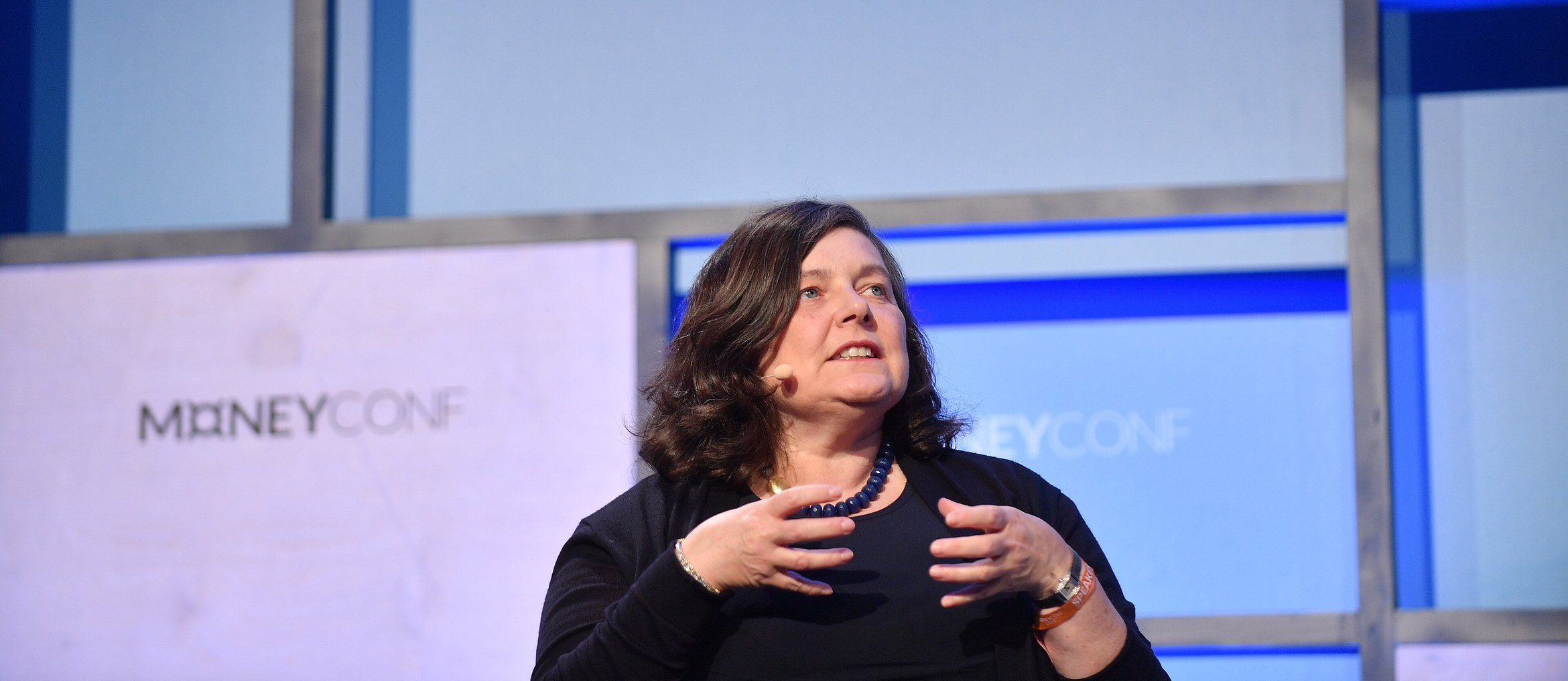
Anne Boden built Starling, one of Britain’s first challenger banks, and walked away from it. Now she is back with a second bank, and this time the customer is not you. The Anne Boden Lockwood AI bank is built for AI agents that spend, pay bills and shop on your behalf, within limits you set. She is paying for it herself, from the proceeds of selling her remaining Starling stake last month.
That is the whole story in one paragraph, and it is the most interesting founder second act of the year. The first challenger wave was about humans doing banking on their phones. Boden is betting the next wave is agents doing banking for humans, and the bank that wins is the one built for the agent, not the person.
What the Anne Boden Lockwood AI bank actually does
Lockwood will offer a free current account, and that is where the familiar banking stops. There is no lending and no savings. It will not charge customers. It makes its money from the interest it earns on deposits.
The product is the agent. Customers set strict spending limits, and their AI assistants pay bills, manage subscriptions and buy within those limits. Boden’s example, given to The Sunday Times, is Meta’s Muse shopping assistant: a customer might allow it to buy groceries with a cap of 100 pounds a month, and Lockwood would reject a 200 pound fuel payment. Lockwood’s own AI checks every agent before a payment goes through, and blocks the ones that look suspicious.
The name came from the agents themselves. Boden put a team of AI agents to work on naming the company, they negotiated with each other over a shortlist, and they settled on Lockwood because it is easy to say, easy to spell, and it has lock in it, which means safe. That is either a neat origin story or a warning about who is really in charge here. Boden, for her part, put it plainly: “I’m building a bank that’s going to be built by agents, to serve customers that want to use agents, and then be defended by agents.”
Lockwood is not a bank yet. It will apply for an electronic money institution licence first, which Boden hopes to hold in 2027, then convert to a full bank in 2028. It has opened a waiting list, and Boden is targeting one million customers in its first 12 months. She also plans to expand internationally, with an eventual stock market listing on the roadmap.
The liability question nobody is pressing
Every bank today is a human interface with software underneath. Boden is flipping it. If agents become the customer, the whole product changes, and the banks that keep designing for thumbs lose.
But an agent that can spend is an agent that can be fooled. That is the sharp question the launch coverage is not pressing hard enough. Who is liable when your agent overspends, buys the wrong thing, or gets tricked by a fake storefront? Boden’s answer is agents policed by agents, Lockwood’s own AI standing guard over yours. That is either the future of fraud control or a hall of mirrors, a system where the trust problem just moves one layer up and nobody can see who made the call.
The timing makes the question harder to dodge. Starling, the bank Boden founded in 2014 and led until she stepped down as chief executive in 2023, was fined 29 million pounds in 2024 for failings in its financial crime controls. The fine came after she left, and it is not her record to carry. But it is the reason the liability question matters. A bank built for agents will be judged on exactly the controls Starling was fined for getting wrong, and this time the customer doing the spending is software.
The funding is the strongest signal in the story
Forget the agents for a moment. The funding tells you more about Boden than the product does.
She sold her near 5 percent stake in Starling last month, for an undisclosed sum. The Sunday Times estimated her proceeds at around 170 million pounds, an estimate, not a confirmed figure. She is funding Lockwood herself for now, and expects to seek outside investment next year.
That is the opposite of the raise-first playbook dominating this funding cycle, where a big round comes before a working product and the hype does the talking. Boden raised nothing, took no outside money, and is building licence first. The discipline is the story. A founder who already built one bank and sold out of it is spending her own money to build the next one, and she is doing it the slow way, licence before launch, limits before scale.
It is also a useful contrast with the startups that raised hundreds of millions this year and then shut down anyway. A pivot can change the product without changing the business, and a giant raise can hide that for a while. Self-funding does not hide anything. Every pound is hers, so every decision has to survive her own scrutiny first.
What founders should take from it
Starling proved a founder could out-build the high street once. It won its banking licence in 2016, launched in 2017, and forced the incumbents to rebuild their apps around customers who expected banking to work like software. Lockwood asks whether the same founder can out-build it again before the incumbents even notice the customer has changed.
The lesson is not to copy the agent angle. It is to copy the sequence. Boden did not announce a bank and then look for a licence, a customer, or a funder. She sold her stake, funded it herself, and is applying for the licence before promising anyone an account. The waiting list is not an account, and she is not pretending otherwise.
If agents do become the customer, the banks that win will be the ones that designed for them from the start, with limits, identity checks and liability worked out in advance. If they do not, Boden still owns the discipline. Either way, she is the founder to watch, because she has already done the hard part once, and she is doing it again with her own money.
Free downloads for founders
Get the weekly startup funding tracker, the founder press checklist, and the CEO Medium media kit. Enter your work email and they're yours.
Browse free resourcesFollow CEO Medium
Leadership stories & founder interviews, wherever you are.
