
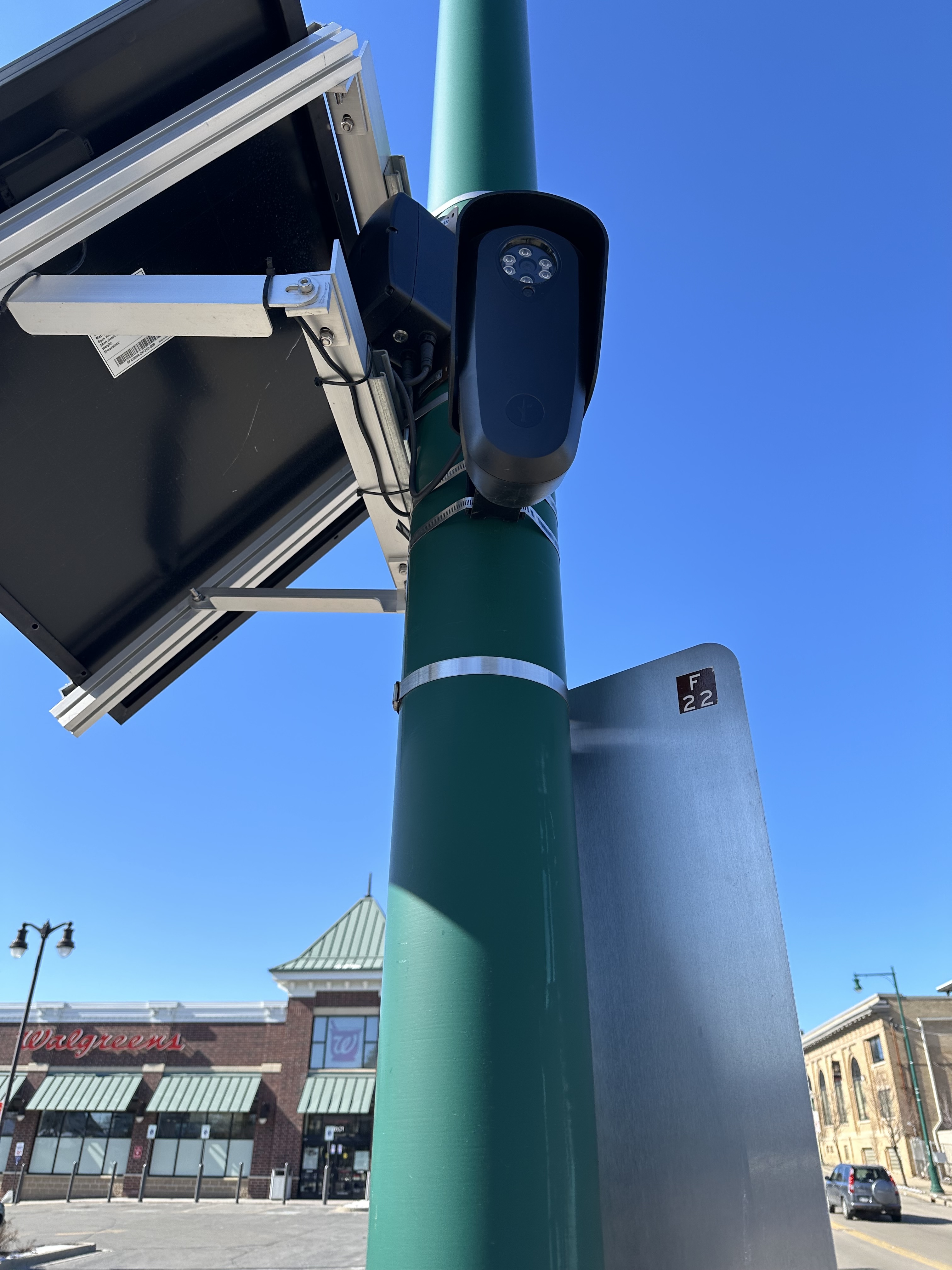
Garrett Langley started Flock Safety after break-ins in his Atlanta neighborhood left police with nothing useful to go on. His company now says it operates more than 120,000 cameras across 49 states. They feed photos and location data into a searchable database used by thousands of law enforcement agencies. This week, the Flock Safety CEO had his chance to sit in front of the United States Senate. It was his moment to answer for all of it. He sent a written statement instead. The next day, his company tried to erase a researcher’s map of its cameras from the internet.
On September 23, a Senate subcommittee held a hearing titled “Always Watching: Flock’s Nationwide AI Surveillance Network.” Four surveillance company chief executives were invited: Flock, Axon, Motorola Solutions, and Verkada. Not one of them showed up. Langley answered the subcommittee’s questions in writing, which is a CEO’s way of testifying without being questioned.
Then came September 24. Flock filed a trademark complaint against researcher Joshua Michael’s public map of 335,701 Flock devices. The complaint went through the brand-protection firm Doppel. The map carried a non-affiliation disclaimer. Note the counting caveat. Michael’s device figure uses a different counting method than Flock’s own “120,000+ cameras” claim. Treat the two numbers as different measurements of the same sprawling network, not as a contradiction.
Why the Flock Safety CEO’s silence matters
What the Senate heard in Langley’s place was worse than anything he might have said himself. A Florida woman, Lindsey Isaacs, told the hearing she spent 13 days in jail. Flock’s system had wrongly flagged her car in a fatal crash case. The charges were later dropped. A senator said Flock had privately admitted it exercises “very little oversight” over how customers search the system. That includes searches for people’s images. An empty chair always testifies against you, and this one testified loudly.
This is the founder lesson, and it applies far beyond surveillance cameras. When your product creates the controversy, you are the trust interface. Lawyers and press releases protect the company. Only the founder’s face protects the brand. Langley chose to be absent from the hardest conversation his company will ever have. Then he reached for legal pressure at the exact moment of peak attention. That is the Streisand playbook in action. Filing the takedown less than 24 hours after the hearing turned one researcher’s website into national news. Founders, take note. Never send the cease-and-desist at the peak of attention.
The concession that came anyway
Under pressure, Flock announced it will cut default license-plate data retention from 30 days to seven. It will also tie police searches to case numbers. Critics say it does not address the core issue. That issue is a private, searchable database of everyone’s movements. They have a point, and there is a second lesson in it. Concessions made under pressure always cost more than concessions made willingly. Imagine Langley had walked into that hearing and offered the seven-day retention himself. He would have looked like a founder taking responsibility. Instead it reads like a company negotiating with a headline.
The cameras are not going away, and neither is the question. Every founder building in a regulated or contested space should watch this one play out. Langley’s playbook this week is exactly the one that does not work. Show up. Answer the hard questions. And if you are going to concede ground, do it before the Senate has to ask.
Free downloads for founders
Get the weekly startup funding tracker, the founder press checklist, and the CEO Medium media kit. Enter your work email and they're yours.
Browse free resourcesFollow CEO Medium
Leadership stories & founder interviews, wherever you are.
