
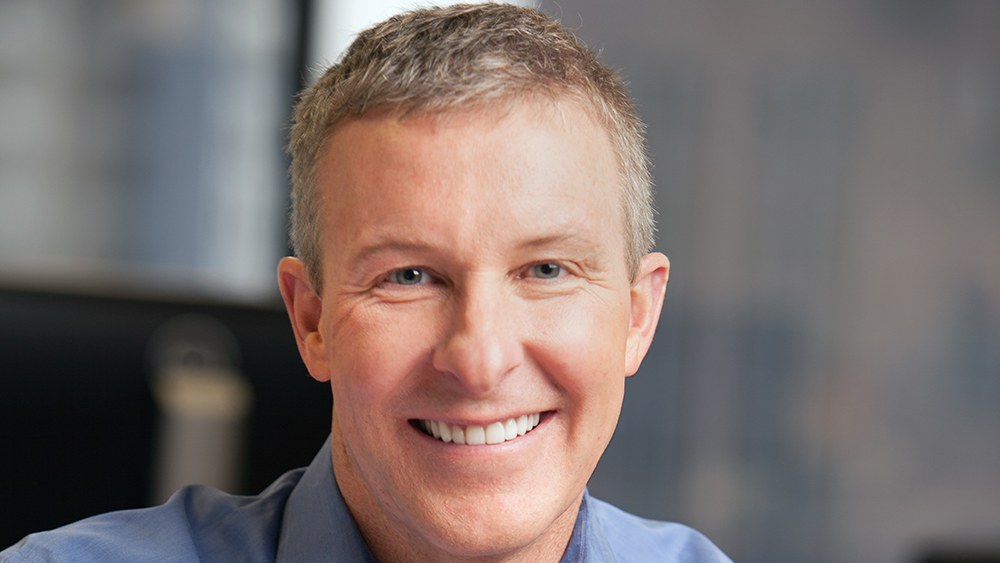
The Scott Kirby wealth tax story started with a question about trust. Asked by the New York Times why the public has lost faith in corporate leaders, Kirby answered with tax policy. Wealth inequality, he said, has become “a danger to our society.” The country should respond with a national wealth tax. It should also levy inheritance taxes that get “close to 100 percent at some level.” Then came the line that guaranteed the remarks would travel: “I would pay them.”
Within hours, the interview stopped being about the tax code. It became about the man. Kirby collected $32.3 million in total compensation last year, 334 times what the airline paid its median employee. Every critic reached for the same two numbers, and in a credibility fight, numbers like that end the argument before it starts.
The number that follows him into every room
The proxy statement is the document that haunts this story. United paid Kirby $32.28 million in total compensation for fiscal 2025. The package held a $1.2 million base salary and $22.6 million in stock awards. It also included $8 million in non-equity incentive pay and roughly $500,000 in other compensation. The same filing put the median United employee’s total compensation at $96,670. That is how the 334-to-1 ratio became the headline inside the headline.
Kirby did not build that ratio alone. United’s board set it, and shareholders approved the framework. Most of the package is stock that rises and falls with the share price. That is standard practice at any large airline. Nevertheless, it is beside the point once the chief executive starts using the word danger. FOX Business and Fortune both asked United how Kirby squares the package with his warning. They also asked whether he plans to reduce his own pay. The airline did not respond to either.
The Scott Kirby wealth tax argument, in his own words
Strip away the noise and the position is genuinely radical for a sitting Fortune 500 chief executive. Kirby argued that a wealth tax has to be national, because a state version would simply push rich residents across state lines. On inherited wealth he went further, backing inheritance taxes close to total confiscation above some level he did not define. He named no threshold and no rate, and he was not endorsing a specific bill. He was stating a principle.
On Wednesday, he returned to the subject on CNBC with a narrower frame: fairness. Workers pay income tax on every paycheck, he argued. Passive wealth, by contrast, can grow for a lifetime and never realize a taxable gain. It can then pass to heirs with a stepped-up cost basis that erases the tax bill. “That doesn’t feel fair to me,” he said. “It’s just a matter of fairness.” He also distanced himself from advocacy, noting that the Times had asked for a non-consensus view: “I’m not a politician, I’m not ever going to be in politics, nor am I a policy advocate for this or other programs.”
The backdrop is stark. Federal Reserve figures give the top 1 per cent of households 32.5 per cent of the nation’s net worth. That is up from 31.1 per cent a year earlier. The bottom half holds 2.3 per cent. Today’s federal estate tax tops out at 40 per cent above a $15 million per person exemption. An inheritance tax close to 100 per cent is a different system, not an adjustment. Kirby joins a short list of wealthy executives, Warren Buffett, Bill Gates and Salesforce’s Marc Benioff among them, who have backed higher taxes on people like themselves. None of them put a number like 100 per cent on the table.
The pile-on was instant, and it was not really about tax policy
Louisiana Governor Jeff Landry supplied the line the whole backlash now runs on. “How audacious from a guy that didn’t even build @united and makes $32 million a year,” he wrote on X. “If he feels that strongly he could simply cut a check.” He linked to the Treasury’s public donation account for the national debt, and closed with: “Let’s see you step up and place your money where your mouth is!”
Harmeet K. Dhillon, the Justice Department’s assistant attorney general for civil rights, skipped the policy and went for the product: “The WiFi didn’t work on my last two flights.” The Wall Street Journal’s editorial board dubbed it “Flying the Socialist Skies at United” and suggested more legroom instead. Some users, meanwhile, threatened to stop flying the airline.
The other side of the ledger is real too. The Guardian’s US Instagram post on the backlash drew about 11,000 likes and 350 comments. It was a sign that breaking ranks buys a constituency advertising cannot. His defenders add that he aimed the argument at a tax treatment, the stepped-up basis, that even many tax specialists find hard to defend.
The messenger is the argument
Kirby’s fairness point is arguable on the merits, and on CNBC he argued it well. But the debate never reached the merits, because a 334-to-1 pay ratio is a rebuttal the public can hold in one hand. A chief executive calls the wealth gap a danger to society while collecting $32.3 million a year. He is asking people to separate the message from the pay stub. They will not. They never do.
There is also a quieter point about boards. United’s directors approved every dollar of that package, knowing that blunt public positions are part of how Kirby leads. We made a version of this argument about the Lindt board this week. Directors own the consequences of the people and the packages they choose. If a board wants a populist chief executive, it should price the populism into the pay decision. And if Kirby believes concentrated wealth is the danger he describes, a remedy exists that needs no act of Congress. He can ask his board to restructure his own package tomorrow. Until he does, the lecture reads, fairly or not, as a prescription for a sacrifice he has not volunteered to make first.
What founders should take from this
Most founders will never be asked about tax policy on television, but the exposure is identical at every scale. The moment you take a public moral position, your own numbers become public evidence, and your critics will audit them faster and more gleefully than your supporters will. Pay, perks, layoffs: all of it gets read as the real text, with your statement as the footnote.
So pressure-test the stance against the spreadsheet before you publish either one. We have written before about how much a founder should pay themselves in year one. The discipline is the same at $32 million as at $120,000. Defend the number in the same breath as the principle. If the two cannot survive in the same sentence, one of them has to change.
Kirby, to his credit, did not retreat. He went on CNBC, restated the fairness case, and shrugged the whole episode off as one man’s view. And the attention only compounds: every angry post repeats his name, his airline and his argument. That is why the final judgement sits with United’s board. If bookings hold, this week becomes a case study in candor. If they do not, it becomes one in something else. For more on how we think about leading in public, see our Leadership & Management hub.
Photo: United Airlines, CC BY 4.0, via Wikimedia Commons
Free downloads for founders
Get the weekly startup funding tracker, the founder press checklist, and the CEO Medium media kit. Enter your work email and they're yours.
Browse free resourcesFollow CEO Medium
Leadership stories & founder interviews, wherever you are.
