
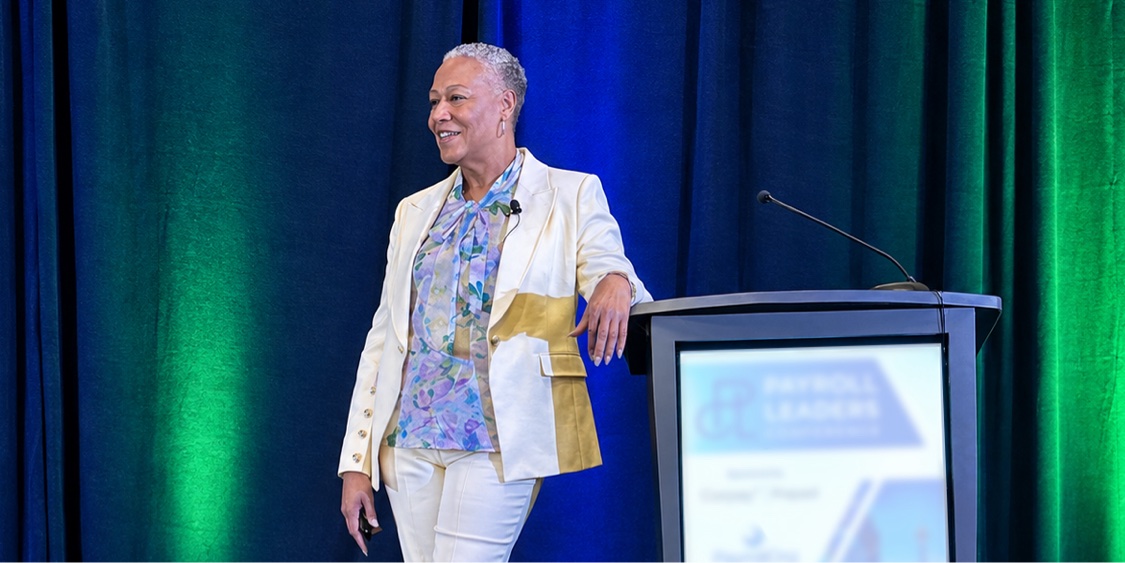
Carolyn Hayden-Garner, a global executive, professional coach, and advisor, has a question she likes to ask a room full of leaders. It’s not “What’s your process?” She asks them when everything goes wrong at once, when all your systems are down, vendors don’t reply, and the deadline’s tomorrow, what’s actually holding your organization up? If their answer is “me,” she’ll tell them that’s not a compliment. That is a problem.
The Job Nobody Notices Until It Breaks
Carolyn Hayden-Garner has spent more than thirty-five years of her life in payroll leadership and is also leading Stock & Equity Compensation on a global scale. Along the way, she has landed on something most org charts don’t show. The strongest organizations aren’t held together by what people can point to, such as the software, the policy, or the vendor contract. They’re held together by what nobody sees at all: the trust between departments, the relationships built before anyone needed them, the culture that lets someone say “I made a mistake” without immediately bracing for the fallout.
Those are called the invisible systems. And they only become visible once pressure shows up and something has to hold.
Payroll Isn’t Math. It’s a Promise.
When you ask most people what payroll does, they say something about hours and paychecks. Instead, Carolyn Hayden-Garner is an avid believer in something else: every pay cycle, an employee makes a quiet decision about the company they work for. Will it do what it said it would do? Nobody says that out loud, of course. But it’s there, under every direct deposit the company makes.
That is why a payroll mistake never lands as a technical error to the person it happens to. It lands as “something went wrong with my life” (think uncleared rent or a bill that’s due) before the correction is issued. Carolyn Hayden-Garner emphasizes: Get the numbers right, and you’ll decide how much trust that employee brings to work the next morning.
The Midnight Hero Isn’t Who You Think
Every payroll team has a midnight hero, the person who stays until midnight every cycle to make sure nothing slips. Leaders love to praise that person. But why does the job require such a person? If your process only holds together because one of your most experienced employees is willing to absorb the strain, that is not dedication. That’s a system held up by one person’s back.
Here’s a test she’d put to any team, payroll or otherwise. If your three strongest people walked out tomorrow, would the operation still run? If your answer is negative, you have a structure that was set to not survive without there being specific people propping it up.
Accountability Isn’t Punishment. It’s Ownership.
Early on in Carolyn Hayden-Garner’s career, she watched one of her strongest employees make a huge, costly mistake. Now, the instinct in the majority of workplaces is to make an example out of it, so everyone can get the message. But she went a different way.
Her solution: name the problem the mistake created, fix the process that led to it, and protect the employee’s standing long enough for the lesson to stick.
This difference in strategy may seem subtle at first, but Carolyn Hayden-Garner believes that when you punish people hard enough, they stop telling you when something’s wrong. Which means you don’t have fewer problems; you just find out about them later when it’s out of your hands. Her leadership rests on the idea that people don’t get stronger from being reminded they failed. They get stronger when you show them how to come back from it.
Stop Mentoring. Start Sponsoring.
There’s a big difference between telling someone what you know and opening a door they can’t reach on their own. Carolyn Hayden-Garner has spent most of her career doing the second one. Especially for women coming up in payroll leadership, she’s noticed the same pattern over and over. A qualified woman looks at an opportunity, decides she’s only ready for eighty percent of it, and waits. Someone else looks at the same opportunity, decides they’ll figure out the rest, and takes it.
Her fix isn’t a pep talk about confidence and self-trust. It’s sponsorship, saying someone’s name in a room they’re not in yet, recommending them before they ask. Leaders who wait for people to feel ready are usually just watching someone else’s hand go up first.
Carolyn Hayden-Garner’s Vision for Organizations That Outlast Their Leaders
Pressure isn’t going to go anywhere. Another deadline, another vendor issue, another executive who wants answers before you have them. So the goal shouldn’t be building a team that survives a crisis, but building one that never has to depend on the crisis going away in the first place.
Carolyn Hayden-Garner leaves leaders with three queries worth writing down. Firstly, what’s invisible in your organization that needs to become visible? Secondly, where is trust sitting on a person instead of a system? And thirdly, who’s the next leader you’re actually developing, not just supervising?
Answering these questions honestly will reveal something most org charts don’t: whether your organization is standing on structure or standing on you.
Related reading: Small Changes, Big Impacts: The Everyday Habits That Quietly Decide How Productive You Are at Work, and explore more in our Leadership & Management hub.
Connect with Carolyn Hayden-Garner on LinkedIn for insights on payroll leadership, organizational trust, and building teams that thrive under pressure.
Free downloads for founders
Get the weekly startup funding tracker, the founder press checklist, and the CEO Medium media kit. Enter your work email and they're yours.
Browse free resourcesFollow CEO Medium
Leadership stories & founder interviews, wherever you are.
