
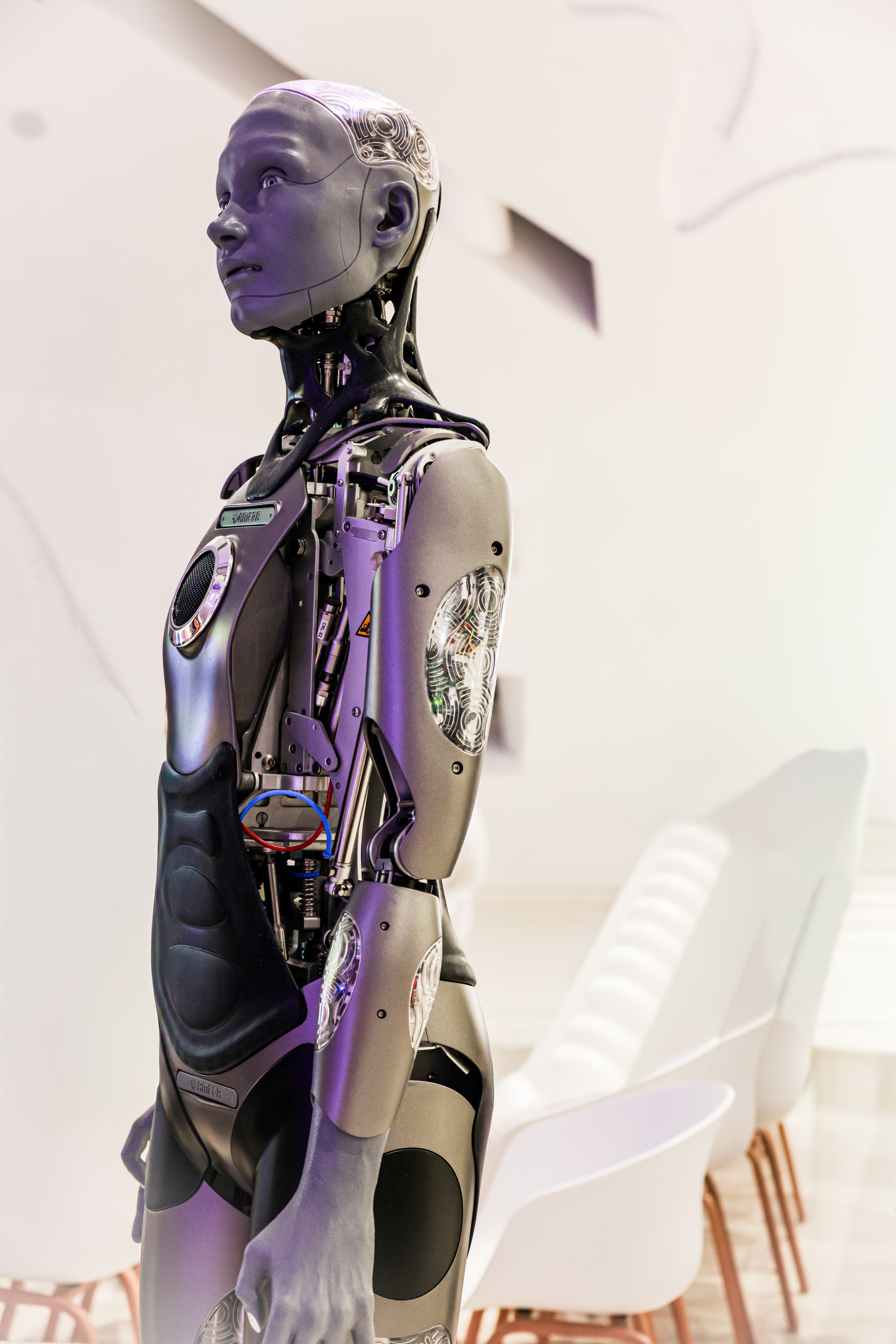
Can AI replace CEOs? The question sounds like a late-night comedy bit. Yet this week, people are asking it in earnest across boardrooms and social feeds. Comedian Bill Burr used a new Rolling Stone interview to flip the usual automation debate on its head. His argument: if artificial intelligence has to take jobs, it should start with the most expensive seats in the building. As a result, clips of the exchange are circulating widely on Instagram and Facebook reels. The reaction says as much about executive pay as it does about the technology. Here is what the data actually says.
The clip everyone is sharing
David Fear’s Rolling Stone interview “I Didn’t Want to Be the Angry Guy” appeared on September 22, 2026. In clips now going viral, Burr argues that AI should replace highly paid chief executives instead of rank-and-file workers. No text transcript verifies his exact wording, so treat the clip as a paraphrase. The thrust is unmistakable: the corner office should be first in line for automation, not last.
It landed because it inverts the usual script. For a decade, the automation debate has centred on cashiers, drivers, warehouse staff and, lately, junior coders. Everyone assumed the safe jobs were the ones requiring thought. Strip out the comedy and the point is economic. A machine doing expensive cognitive work for a fraction of the price raises an awkward question. Why does the priciest employee in the building stay exempt?
Can AI Replace CEOs? The Case For
Take the joke out and the logic is simple. A chief executive is, in large part, an information processor: market data goes in, capital allocation decisions come out. Machines now do that faster, more consistently and more cheaply than any human. If the job is mostly pattern recognition and resource allocation, the maths favours automating the CEO. The salary at stake dwarfs a warehouse worker’s.
The question for boards is therefore not whether the idea is outrageous. It is whether the numbers justify it.
The math: $22.8 million vs the median paycheck
The AFL-CIO 2026 Executive Paywatch report puts the number at $22.8 million. That was the average 2025 pay for S&P 500 chief executives, excluding Elon Musk. That is 312 times the median US worker, up from 285 times in 2024. Read that again: the ratio widened in a single year.
Put it another way. One CEO’s annual pay could fund hundreds of median salaries. It could also bankroll a serious programme of AI investment. Replacing even a fraction of that compensation with software is worth millions a year. Automation has always gone after expensive labour first. It has simply never gone this high up the org chart before.
It already happened: the companies that gave AI the corner office
But can AI replace CEOs in practice? Two companies decided to find out back in 2022.
In August 2022, NetDragon Websoft made the appointment. The Hong Kong-listed firm (stock 777) named Ms. Tang Yu as Rotating CEO of subsidiary Fujian NetDragon Websoft. Tang Yu is an AI-powered virtual humanoid. Chairman Dejian Liu said: “We believe AI is the future of corporate management, and our appointment of Ms. Tang Yu represents our commitment to truly embrace the use of AI to transform the way we operate our business, and ultimately drive our future strategic growth.” Her brief was concrete: streamline process flow, act as a real-time data hub, improve risk management and support talent development.
Days later, Polish luxury rum maker Dictador hired Mika, a humanoid robot built by Hanson Robotics, as chief executive. Dictador signed the contract on August 30, 2022, and her “career” launched on September 1. Mika joined the board, taking responsibility for the Arthouse Spirits DAO project and communications with the DAO community. Europe president Marek Szoldrowski called the decision “revolutionary and bold.” The appointment drew wide coverage, including a detailed report by FoodBev.
A caveat: both moves were at least partly publicity. Nothing verifies that either Tang Yu or Mika still holds the role in 2026. Treat them as experiments, not precedents. But they proved the barrier was never technical. An AI can already sit in the org chart. The barrier was cultural, and culture is shifting.
Even CEOs agree: half say AI could do their job
The most surprising data comes from chief executives themselves. A 2023 survey by edX and Workplace Intelligence polled 800 executives, including more than 500 US CEOs. The result: 49% believe AI should automate or replace most or all of their role. In contrast, only 20% of workers said the same. Nearly half of sitting CEOs think a machine could do their job.
Beautiful.ai surveyed 3,000 US managers in April 2026. It found that 55% say AI could reduce their own pay. Another 58% say AI output matches or beats an experienced manager. And 35% believe replacing employees with AI would benefit their company, up from 23%. The people closest to the technology are the least sentimental about it.
Gartner polled 469 CEOs and senior executives in April 2026. It found that 80% expect AI to force a high-to-medium degree of change in operational capabilities. Investors see it too. In our interview with internet investor Toine Rodenburg, the theme was how quickly AI is reshaping company building.
Not everyone is convinced. Nvidia chief executive Jensen Huang spoke at the AI Summit in Mumbai in October 2024. He said AI can handle 20 to 50 percent of a given job. His caveat: “in no job can [AI] do all of it.” Asked if AI could replace him, he said: “absolutely not.”
What AI does better than a human CEO
An AI chief executive never sleeps, never forgets a KPI and can model thousands of scenarios before breakfast. Tang Yu’s job description is the template. A real-time data hub never misses a risk signal. It tracks operations and talent metrics around the clock, with no human calendar slowing it down.
Then the cost curve. CEO pay climbs toward 312 times the median worker. Meanwhile, open-source models are slashing the cost of AI capabilities. Machine intelligence gets cheaper every year; corner-office intelligence gets dearer. The curves point one way.
And consistency: software has no moods, builds no empires and never falls in love with its own strategy. Where decisions are genuinely data-driven, the absence of ego is a feature.
What AI cannot do: accountability, judgment, and trust
This is where the robot-CEO case breaks down. Scott Hartkopf of Threshold/AI put it sharply in February 2026. A board can fire a human chief executive, but “what happens when the CEO is software?” After all, someone must answer for decisions: shareholders, regulators and courts all need a human being.
Patrick Kamba made the cultural version of the point in CEOWORLD in May 2026. “Employees notice accountability” when leaders over-automate. Teams start asking where judgment really resides. A workforce unsure who is deciding will not follow with conviction.
Satish Mekerira offered the philosophical version in July 2026. “Algorithms cannot possess moral agency… AI can generate the map, but only a human can bear the weight of the journey.” Gregory Downey added the same month. “AI does not empathize. It predicts language associated with empathy… because it cannot be moved, it cannot truly move another human being.”
The through line: leadership is not just decision-making. It is owning decisions, absorbing uncertainty and carrying people through change. Software cannot do that, because when things go wrong, someone always has to answer.
The realistic future: the augmented executive
So can AI replace CEOs? The math says maybe, but accountability says not yet. The realistic outcome is a smaller, cheaper, AI-augmented C-suite. Fewer executives will wield machine intelligence. Humans keep judgment for the calls carrying moral and legal weight.
The pressure will hit pay first. Fifty-five percent of managers expect AI to compress their compensation. Executive pay cannot sit at 312 times the median worker forever. Boards once justified eight-figure packages as the price of rare talent. Now they must explain why they cannot rent that talent, in part, from a data centre.
For operators, the lesson is practical. The executives who thrive will treat AI as leverage, not threat: machines handle information, humans handle responsibility. Similarly, smaller firms face the same squeeze. Our interview with Chirag Shah, founder and CEO of Nucleus Commercial Finance, explores the pressure. Our entrepreneurship and startups hub tracks how company building is changing.
Burr’s joke will keep circulating because it holds a truth every pay ratio sharpens. The automation debate was never about whether machines can do the work. It is about whose work machines automate first. For a century, the answer was whoever cost least to keep. The next decade may finally invert that.
The experiment is already running. Every board that benchmarks executive pay against machine capability is, knowingly or not, voting on Burr’s proposition.
