
The Meta $25 billion fine is not a privacy penalty. It is an invoice, and its line items speak a language every founder understands. This is what it costs when the story you tell users and the business you actually run stop matching.
Watch the story on CEO Medium News:
Watch the full episode of CEO Medium News
On Wednesday, a New Mexico judge ordered Meta to pay $25 billion to the state, the largest penalty the company has ever faced over the Cambridge Analytica scandal. The number is enormous. The reasoning is worse. Judge Francis Mathew did not describe a rogue team or a policy slip. He described a plan.
What the Meta $25 billion fine actually says
A jury found in September that Meta violated New Mexico’s Unfair Practices Act more than 43 million times. The violations misled users about how Meta handled their data. Each violation can carry a penalty of up to $5,000, which put the theoretical ceiling near $219 billion. Mathew set the figure at $25 billion.
The case reaches back to 2018. That year, Facebook disclosed that a personality quiz app had harvested data from as many as 87 million users. It fed the data to Cambridge Analytica, the political consultancy that built voter profiles for the 2016 Trump campaign. New Mexico sued in 2021. While 48 other states chose to settle their claims, New Mexico went to trial alone. It sat through two weeks of evidence, and won.
The judge also found that the misrepresentations went far beyond a marketing page or a help centre. They reached the most senior levels of the company. That includes chief executive Mark Zuckerberg and former chief operating officer Sheryl Sandberg.
Deception at the core of the business model
One sentence in the ruling is why this story belongs on a leadership page and not just a legal wire. Mathew wrote that Facebook’s misrepresentations about users’ control of their data “were not isolated incidents, but rather a systematic pattern of deception at the core of Facebook’s business model,” part of “a coherent strategy designed to mislead the public.”
Read that as a founder. Courts fine companies for broken rules all the time, and companies pay and move on. This ruling says something different: that the gap between the promise and the practice was the product strategy. The promise was control. The practice was collection. The company told users they held the keys while it monetised what walked through the door.
That is the version of the story that should worry every operator. After all, most companies do a milder version of it. The privacy page says one thing. The growth dashboard rewards another. Nobody writes the deception down as strategy, which is exactly how it becomes one.
The trust gap has a market price
Every chief executive claims trust is the company’s most valuable asset. The claim is cheap. Trust is not a value on a wall. It is the distance between what you say and what you do. And the people who measure it cannot see inside your building.
Meta’s fine is simply the market price of a wide gap, calculated by a jury at $5,000 a violation. Attorney General Raúl Torrez, who brought the case, joked that the state may have “paid for the construction of schools for the next 100 years,” and state officials say the money is dedicated to an education fund. Founders should hear the other side of the joke. The tuition is real. Whoever holds the company when the gap is finally measured pays it.
There is a practical discipline buried in this. Write the policies you could defend in a courtroom, not the ones that read well in a press release. Audit the distance between your public story and your data practices before a regulator does it for you. New Mexico has now published the playbook, and attorneys general in the other 49 states know how to read.
The appeal does not end the lesson
Meta says it will appeal, and the number may well shrink. Chief legal officer C.J. Mahoney called the ruling one that “makes it all but impossible to do business in the state of New Mexico.” He argued that the lawsuit “seeks to impose a tax on speech.” The company may be right about the law. It is probably wrong about the lesson.
A penalty that a company can price in is not a deterrent; it is a licence fee. Meta has paid licence fees before, including a $5 billion federal settlement in 2019 over the same scandal. The uncomfortable question this verdict asks is whether $25 billion is finally large enough to change the internal maths. Or Meta absorbs it too, as the cost of doing business the way the business has always been done.
That question is not really about Meta. Every founder reading this runs a smaller version of the same calculation. How much daylight can exist between the story and the operation before someone with subpoena power measures it? New Mexico just showed the measuring instrument. The companies that survive it will be the ones that closed the gap while it was still cheap.
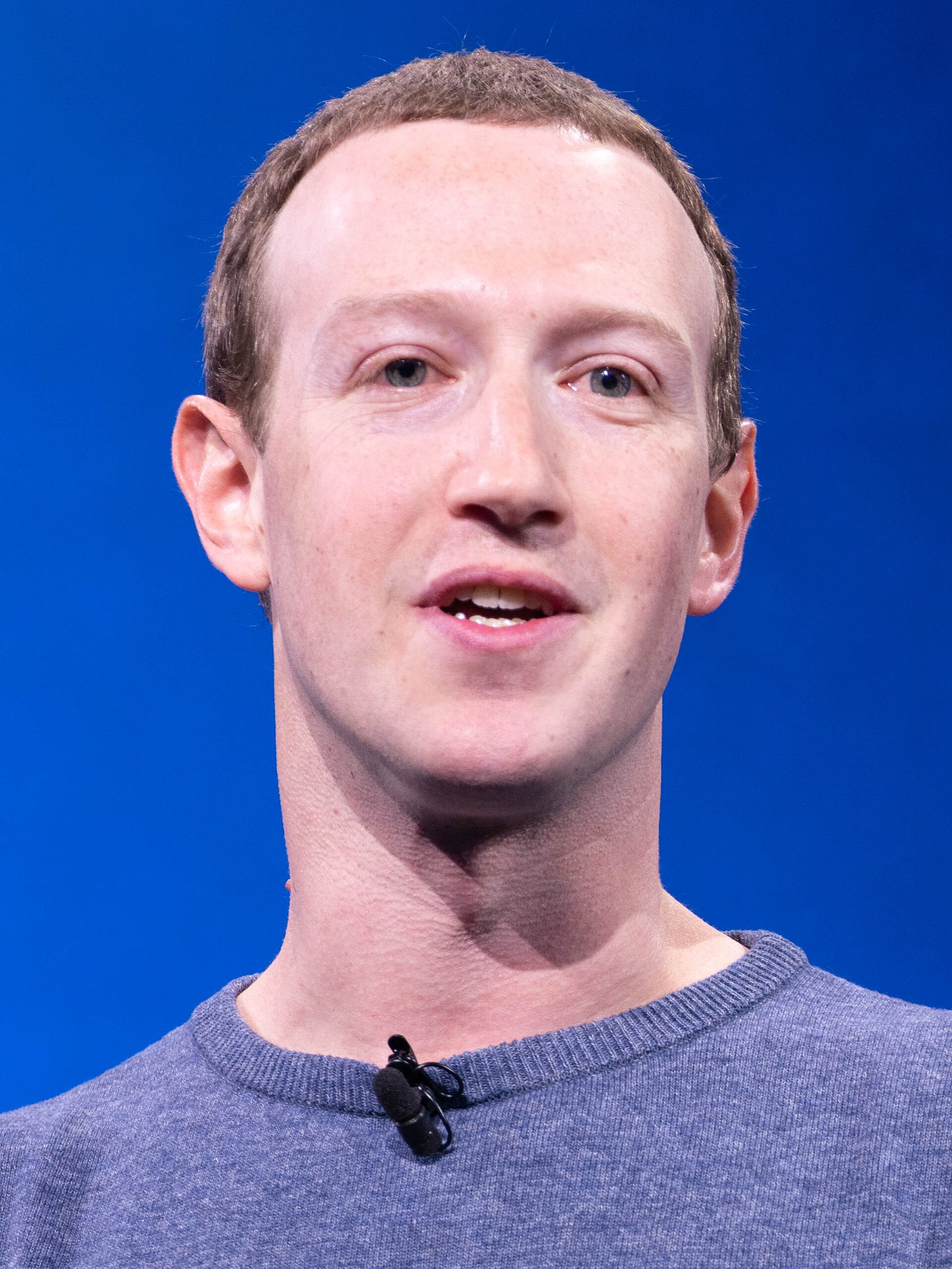
Photo: Anthony Quintano, CC BY 2.0, via Wikimedia Commons
Free downloads for founders
Get the weekly startup funding tracker, the founder press checklist, and the CEO Medium media kit. Enter your work email and they're yours.
Browse free resourcesFollow CEO Medium
Leadership stories & founder interviews, wherever you are.
